Tuesday, November 24, 2009

Giving Thanks

After the parade


around the table we gather


for: laughs community love


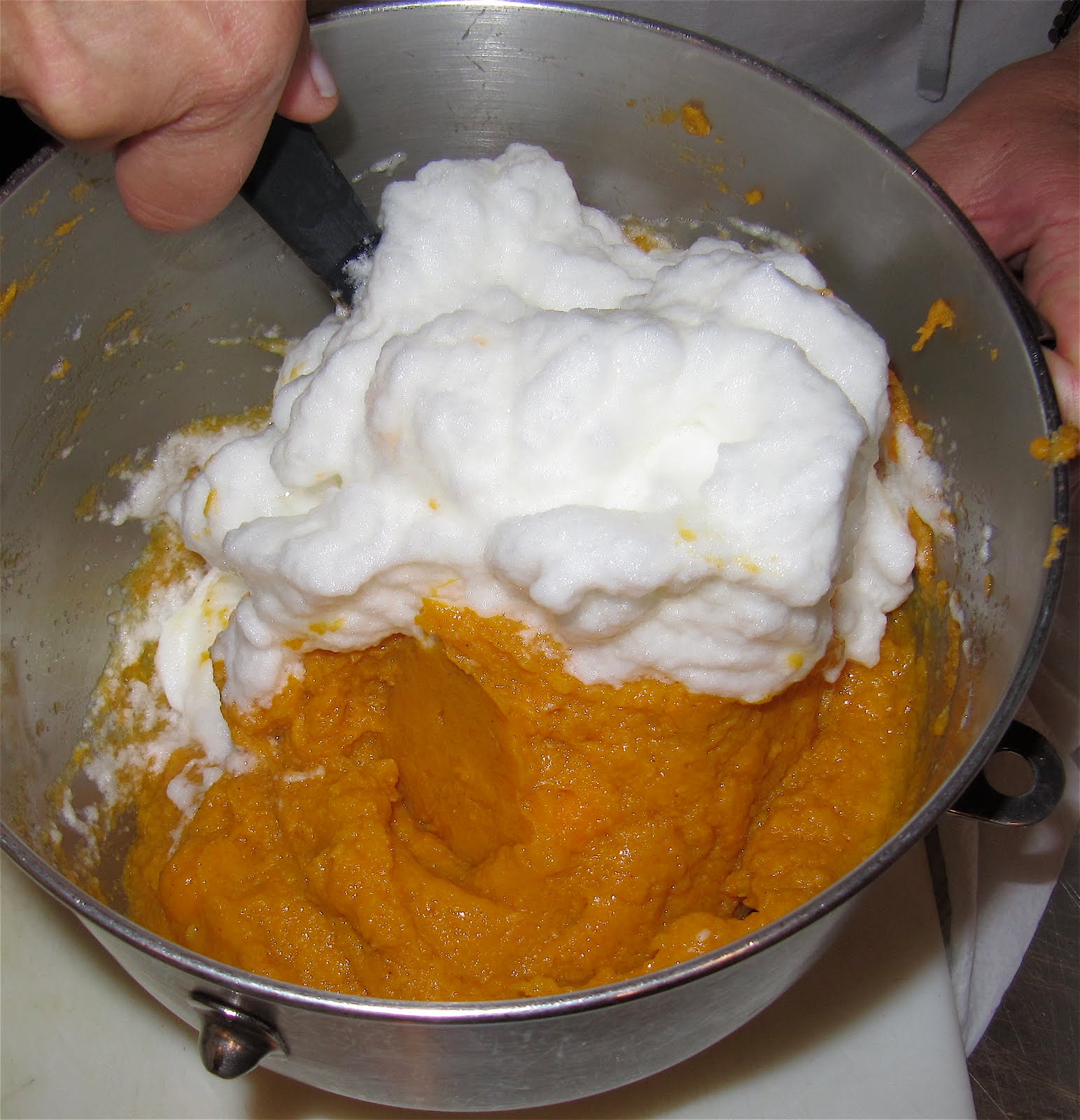
Sweet Potato Soufflé - yields 8 servings
3 1/2 pounds of sweet potatoes (or yams) - peeled and diced
2-1/2 cups persimmon puree - approx. 3 ripe fruits (skin and seeds discarded)
2-tablespoons thyme leaves - chopped
1-tablespoon lemon zest
1-tablespoon turmeric
1-teaspoon white pepper
1/2-teaspoon cayenne pepper
1-tablespoon honey
1/2-cup fresh orange juice
1-tablespoon salt
4 egg whites - beaten to stiff peaks

Pre heat the oven to 275 degrees.

Cook the sweet potatoes in boiling water till soft. While they are still warm mash the potatoes into a smooth mass. Place the potatoes on a baking tray in the oven for 15 minutes to dry them out a bit.

Raise the oven temperature to 350-degrees.

In a large bowl thoroughly combine the sweet potato, persimmon puree, thyme, lemon zest turmeric, cayenne, pepper honey, orange juice and salt together. Gently fold in the egg whites until they are completely incorporated. Place in a 2-quart soufflé or casserole dish and bake for 40 minutes. Serve immediately.


Saturday, November 21, 2009

Seasons to Taste

So many of us are readying ourselves to spend a day or two preparing a meal that is about gathering everyone and anyone to give thanks. Yes, this is my favorite meal to present as it is steeped in gratitude. There are no overt religious overtones dividing us, just in its essence, the pure joy of the bounty of the land, and the assembly of people to share that blessing.

This is also the holiday when we reach not just into our recipe files to present those dishes that represents our individual cultural and personal tastes, but reach into the spice cupboard to pull out some of those spices we have not seem since last time these dishes have been prepared. Now, there could be a slight problem with this infrequent visit.

Spices, defined as the root, stem, bark or seed of a plant offers up its fragrance by releasing their volatile oils when exposed to heat and light. If your spices are pre-ground and stored in a clear container most of their potency has already been wasted. I endeavor to always buy spices whole, and have bought a small coffee grinder that is dedicated to crushing up those aromatic plant parts. This keeps their redolent potential secured until I am ready to release them. To further trap their promise I store the majority of my spices in the freezer – a cool, dark spot is the optimum condition for preserving their continued offering.

In the spirit of serving the best, you may want to take an assessment of those seasoning notes, and if need be replace them. I also source my spices from either a focused spice shop or an Indian spice shop. Try penzeys.com or kalustyans.com for your refurbishment needs, and a happy carving to all.


Cocoa Spice Rub
2 ancho chilies
2 dried New Mexican chilies
1 tablespoon ground cumin
2 teaspoons ground fennel seed
1/2 teaspoon celery seed
1 teaspoon ground clove
2 teaspoons ground nutmeg
2 teaspoons ground coriander
1 tablespoon dried oregano
1/4 cup cocoa powder
1 tablespoon tomato paste
1/2 cup cider vinegar
2 tablespoons olive oil
1/2 pound butter - at room temperature

Heat a skillet to very hot over a high heat. Toast the chilies for 30 to 60 seconds in the pan turning them frequently. You must make sure not to burn the chilies and cause them to turn bitter. Let the chilies cool for a moment and then remove the seeds and membrane and discard them. Ground the chilies in a spice grinder.

In the same skillet toast the cumin,fennel, celery seed, clove, nutmeg, coriander for about 30 seconds, keeping the pan moving constantly. Immediately get the spices out of the skillet into a bowl. Mix into the bowl the ground chilies, dried oregano. cocoa powder, tomato paste, cider vinegar oil and butter, and mix all the ingredients to completely combine.

Place the rub under the skin of the turkey before roasting.

Saturday, November 14, 2009

'shrooms

It is cool and damp. While for most of us it is a sign that it is time to be preparing for the hibernation season there are some things that find this a time to flourish. We can almost be forgiven for not realizing that mushrooms might actually have a season when football field sized containment facilities have them sprouting twelve months a year. If you are curious to go beyond the ubiquitous button, portbello, cremini or shiitake you have to wait for early spring or autumn to get your fill of fungi. I will warn you that these highly coveted patches of loam producing fungus can quickly drain your pocket.

When I lived in northern California I had a source for a matsutake mushroom a rich and meaty variety that was all so welcomed when they where available. But I never got to know the location as to where these particularly desired mushrooms happen expected for the generally location of southern Oregon. The same is to be said for the hen of the woods, pompoms and blue foots I get here in the northeast. Mushroom foragers prize their own patches where they can find certain mushrooms that they wily try to distract you from any hint of location. I always ask where they were found more out of idle curiosity on my behalf, as I would never think of going out into the dank forest eyes fixed downward spotting. Truthfully, I would be too concerned that I would harvest a toxic specimen, and it probably would not be a magic variety. So, I believe it is best to leave it to the trained eye of an expert to recognize which ones I should be sautéing.

Given their preciousness I store mushrooms in a paper bag, never plastic, as it tends to allow moister to accumulate causing the mushrooms to breakdown. If I wash them there are always sitting in a colander in order to allow the water run right through to prevent adding any excessive water to the mushrooms. Otherwise, I use a clean brush and dust them clean. Simplicity is a just crisped mushroom that has been sliced, and sautéed in olive oil with a suspicion of garlic, salt, pepper and a dash of lemon to finish.


Wild Mushroom Soup - yields 8 - 10 servings
2 tablespoon butter
1 large leek - white portion only, washed and diced
4 shallots - diced
2 clove garlic - diced
1-/2 pounds mushrooms - such as cremini, chantrelles, or morel, roughly chopped
1 oz dried porcini mushrooms - roughly crushed
2 tablespoons thyme - leaves only, roughly chopped
2-1/2 cups chicken or vegetable stock
2-tablespoons vermouth
2-cups heavy cream
Salt and freshly ground pepper to taste

In a four quart pot melt the butter over a medium flame and add the leek and shallots. Cook for a few minutes stirring constantly until they lose their raw look and become translucent. Add in the garlic, mushrooms, dried porcini and thyme cooking for a few minutes longer. Pour over the stock and bring the soup to a boil. Lower the flame to a simmer and add the vermouth. Cook the mixture for 20 minutes and then add in the cream and season with salt and pepper. Simmer the soup for an additional 30 minutes.

After the soup has finished cooking puree of the soup in a food processor fitted with a steel blade or in a blender. Return the pureed soup back to the pot. Correct seasoning.

Saturday, November 7, 2009

A true starchy gem

I long for, and wait for a certain subterranean tuber that is grown by only two local farmers here in the northeast. It is a particular variety of potato that I ate while on a trek through the Andes Mountains of Ecuador. Simply called a papa amarilla (yellow potato) it is by far the richest, creamiest potato I have had the absolute pleasure to bite down on. It requires altitude and a chill to come to maturation, but given the right environment these spuds satisfies every potato craving I could muster. The closest proximity would be the Yukon gold though it can’t replace the mouth-joy I get from the papa amarilla.

It has to be since last April that I got to eat anything made with my favorite tatter-tot for it is my habit to put up some basic potato soup that I will freeze, and then either warm straight up, or perhaps melt some cheese into it; swirl pureed avocados through it; brown chunks of chorizo to add to it. The soup is easy potatoes, onion and garlic just barely covered with water. Cooked to soft, and then pureed it is perfectly simple. Today, I am ready to just eat them.


Potatoes with Greens – yields 6 servings
1-1/2 pounds papa amarilla or Yukon gold potatoes
5 garlic cloves – thinly sliced
1/4-cup extra virgin olive
6-cups roughly chopped mixed greens – such as collard, mustard or turnip
Salt and freshly ground black pepper to taste

In a 2-quart saucepan add the potatoes and cover with water. Bring to the boil, and cook for about five minutes. Drain the potatoes and allow them to cool. Then cut the potatoes in half or quarters.

In a 10-inch sauté pan add the garlic and oil, and over a high heat cook the garlic until it starts to golden. Then add in the potatoes and gently toss to coat with the oil. After about five minutes add the greens. Reduce the heat to low, and cook for 10 minutes with a lid that is slightly a askew. Season with salt and pepper, and serve.


Friday, October 30, 2009

quiet pleasure

Hearing the roar
I listen for the whisper
..................................rustling leaves
..................................sizzling skillets
..................................wafting nutmeg
the breath of autumn


Brussels Sprouts with Caramelized Onions – yields 6

1/4-pound sliced bacon – cut into 1/2” pieces
1-large onion – thinly sliced
4-galic cloves – thinly sliced
6-cups Brussels sprouts – halved
Salt and freshly ground black pepper

Heat a 10-inch sauté pan over a medium heat, and add the bacon. Cook the bacon until crisped. Remove from the heat, and with a slotted spoon remove the bacon. Hold the bacon to the side on some paper towels.

Return the sauté pan back to a medium heat, and cook the onions in the bacon fat until golden brown then add in the garlic. Cook the garlic for a few minutes then add in the Brussels sprouts and crisped bacon. Cook for five minutes, and season with salt and black. Serve immediately.

Friday, October 23, 2009

a lost bite

Securely tucked into our collective consciousness there is a story of good and evil, and the wakening to reality. All brought upon us by a simple bite of some dangling fruit weighted down by its maturation, shimmering with the beauty and temptation of the moment. Now, I personally am not one to embrace this yarn as fact but do appreciate its moral tale. There are a few reasons I cannot fully live this story, and one reason in particular throws me completely off course.

If in fact this story of woe is true then it would be impossible for the apple to have been the source of desire and the subsequent bite that forever banished us from a blissful earthy existence. For historic tracing plants the icon of the autumn season somewhere in China traveling out from there transforming pies forever. However, there is another fruit of similar size and shape of the apple that can claim the Fertile Crescent as its home – the quince.

Golden yellow when ripe with an aroma that could seduce the most jaded of noses. This fruit is not to be eaten raw. Bitten into prematurely and a tannic, sour note laces your tongue. To avoid this folly the quince is always cooked: baked, sautéed, boiled down revealing a sweet, rosy fruit. It even has the texture that is reminiscent of a cooked apple. So, perhaps I should not be so hard about this confusion as long as it does not cause another lapse in judgment.

In England one may have some quince cheese with some cheddar while enjoying a sip of port or visit Spain where membrillo (quince paste) is served with sliced manchego cheese. If the Tartin sisters had an orchard of quince that dropped tart would have a new topping. In the New World the Spaniards clearly discovered the possibility of guava to satisfy their need for a rich, fragrant slice of boiled down quince.

Is it the ease of access that the apple offers with its quick, crisp, snap right there in the market that allowed it usurp the quince’s rightful place in our history? I absolutely embrace this long ago discarded siren, and celebrate its temptation.


Quince Laced Cake – one 9-inch cake
1-1/2 pounds quince – peeled, cored and sliced
5-ounces guava paste – sliced
8 ounces unsalted butter
1-cup sugar
2-eggs
1/2-cup milk
1-teaspoon rose water
1-1/2 cups all-purpose flour
1-1/2 teaspoon baking powder
Pinch of salt

Pre-heat the oven to 350-dgrees.

Grease and flour a 9-inch cake pan.

Beat the butter and sugar together until very light and fluffy.

Mix to together the eggs, milk and rose water.

Sift the flour, baking powder and salt together.

Once the butter is beaten slowly beat in the eggs scraping down the side of the bowl a couple of times. Mix in the flour and beat to completely combine.

Lay the sliced quince on the bottom of the cake pan, and then disperse the guava paste over the quince. Pour over the cake batter. Bake in the oven for 35 to 40 minutes, until a cake tester comes out clean.

Remove the cake to a cooling racking. Cool the cake. Turn the cake out on to a plate.


Saturday, October 17, 2009

Warming the chill

So, spring started strong with a blast of hot air readying a hopeful season of plenty. Then came almost a month of rain. Now, not even a month into autumn and an unexpected northeaster has pelted some areas with the earliest snowfall in ions. This is clearly the year of truncated expectations.


Trolling the market signs of the unwanted snap where evident on many of the leafy greens that wore patches of distress. I am still not sure if the Brussels sprouts will ride out the premature and unwelcomed cause for multiple layers unscathed.

All is not lost as the potatoes are blissfully dug in totally okay with the early blanket. And, that icon of autumn is fortunately faring well enough as pumpkins can be harvested and held – no need to fear a dearth of carved toothy faces sitting on neighborhood porches. Though for me, living vertically stacked, I bring home these hard-skinned squashed not as a decorative element but definitely meant for the kitchen. I will buy a few that will be peeled and cubed destined for a freezer bag and a deep winter meal –- perhaps a pumpkin chili with smoky bacon or even a pie. Today, with a wool sweater and shearing jacket helping me brace the morning a hot bowl of soup was all I could wrap my head around.


Pumpkin Soup – yields approx. 4 quarts
7-pound pumpkin
2-large onions – diced
6-carrots – peeled and diced
1 jalapeno pepper - diced
1/2-pound parsnip – peeled and diced
2-tablespoon olive oil
1-teaspoon fresh thyme leaves - chopped
2-teaspoons fresh sage leaves – chopped
2-teaspoons orange zest
Salt and freshly ground pepper to taste

Cut the pumpkin in half, and scoop out the seeds. Reserve the seeds to the side.

Pre-heat the oven to 375.

Peel the pumpkin, and cut the meat of the pumpkin into 1-inch pieces. Spread the cut pumpkin on a baking tray, and place in the oven. Cook the pumpkin for 15 minutes to lightly brown.

Transfer the pumpkin to an eight-quart soup pot, along with the onion, carrots, jalapeno and parsnip. Cook with four-quarts of water. Bring to the boil, and them reduce to a simmer. Cover the pot, and cook the soup for an hour.

After an hour puree the pumpkin mixture until smooth. Return to the pot, and season with salt and pepper.

While the soup is simmering free the pumpkin seeds from the fibrous meat it clings to. Wash the seeds clean. Spread the seeds onto a baking tray, and dry in the oven for five minutes.


Heat an eight-inch sauté pan over a medium heat, and add the olive oil and pumpkin seeds. Cook the pumpkin seeds until golden brown. Remove from the heat, and immediately toss in the thyme, sage, orange zest, salt and pepper.


Serve the soup garnished with the seasoned pumpkin seeds and a dollop of crème fraiche or a sprinkle of grated cheddar cheese.